
Learning and employee experience
Training Records and Competency: Know the Difference
Training participation, a knowledge check and a practical assessment answer different questions. Define what each record is intended to show before combining them into a learning report. This guide helps healthcare teams frame that distinction and does not claim that a completion indicator certifies professional or clinical competency.
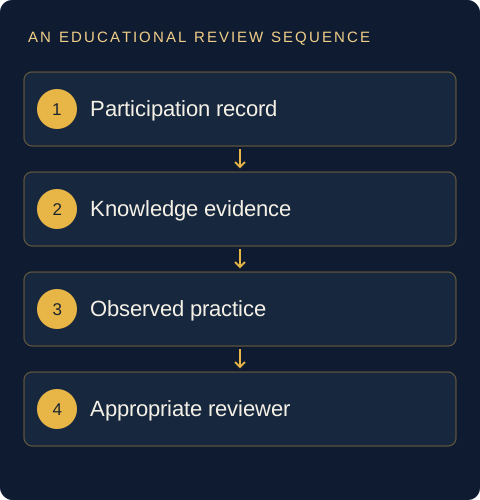
Define the evidence you need
Begin a learning report with the question it needs to answer. Was a person given access to a topic? Did they participate? Did they demonstrate understanding of a defined concept? Has an appropriately qualified person assessed a specific practical activity? These questions need different evidence and should not be collapsed into an unexplained “trained” label.
WHO’s 2022 framework describes education outcomes as informing learning activities and assessment approaches. That distinction supports careful planning of evidence; it does not endorse any particular software indicator as proof of competency. [source]
Participation, knowledge and observed practice
| Record | Useful question | Limit |
|---|---|---|
| Participation | Did the person attend or access the activity? | Does not establish practical performance. |
| Knowledge check | How did the person answer the defined questions? | Depends on what was tested and how. |
| Observed practice | What did an appropriate assessor observe in the specified activity? | Must retain the context and assessment scope. |
Assign reviewers and assessment responsibilities
Identify who defines the learning objective, who supports the learner and who can assess the relevant outcome. These roles may overlap, but their responsibilities should remain clear. HR can coordinate records while an appropriate educator or clinical leader determines the assessment required for a professional activity.
State the scope of an assessment and any limits on the conclusion. Avoid giving a completion badge a broader meaning than the evidence supports. Professional authorisation or credential verification, where relevant, requires its own appropriate process.
Keep role-relevant learning records
A useful record can identify the topic, content version, activity completed, evidence collected and reviewer where one is needed. Decide which fields are necessary for the report’s purpose. Do not place detailed personal assessment notes in a widely shared dashboard simply because a system has a free-text field.
Keep the underlying labels understandable. If one department uses “complete” to mean attendance and another uses it to mean reviewed assessment, resolve that difference before comparing totals. A common label without a common definition can mislead the reader.
Handle incomplete or outdated learning
Review content and assessment methods
Review whether the activity and evidence still match the intended outcome. Discuss recurring misunderstandings with the educator rather than assuming the solution is simply a higher score threshold. If a practical assessment is appropriate, decide how it is supervised and recorded through the institution’s approved arrangements.
This article does not set mandatory training hours, accreditation requirements or clinical assessment standards. It makes no claim that a learning record improves patient outcomes. Those statements require the applicable professional sources and qualified review.
Confirm what your training software actually records
- Does “completion” represent access, participation, a submitted answer or reviewed evidence?
- Can the content version be identified?
- How are unfinished or revised activities represented?
- Who is allowed to view or amend records?
- What reports can be demonstrated rather than merely described?
GanpatrAI’s Induction & Training illustration shows a sample journey and question; it does not certify competency. Read the induction design guide to connect these evidence questions with a practical learning sequence. Confirm the module’s actual recording and review functions in a guided demonstration.
Sources and scope
The cited publications support the specific statements linked above. Checklists and fictional examples are editorial proposals for review, not requirements imposed by these sources.
- WHO — Global Competency and Outcomes Framework for Universal Health Coverage, 2022
Alignment of education outcomes, learning activities and assessment; not an accreditation checklist for this institution.