
Workforce operations
Hospital Shift Rostering: From Planning to Review
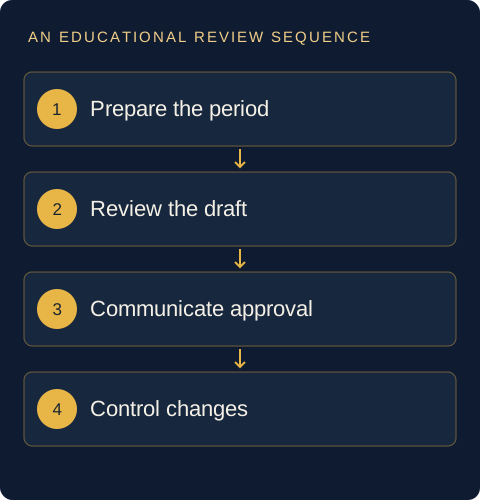
A useful roster process makes planning inputs and review responsibilities explicit. Start with the roster period, the people responsible for preparation and the checks your hospital requires. Then define how changes are reviewed and communicated. This guide describes planning practice rather than promising automatic scheduling or guaranteed coverage.
Define the planning period and required inputs
Begin with a defined roster period and a named preparer. Establish when information is collected, who reviews the draft and how the approved version reaches staff. Keep these milestones separate: a prepared roster is not automatically an approved or communicated roster.
NHS England’s 2020 e-rostering guidance discusses governance and pre-approval review as part of implementation. It is a useful UK reference, not a source of mandatory staffing numbers, working hours or leave rules for an Indian hospital. [source]
Confirm local coverage and role requirements
Ask the relevant operational and clinical leaders to identify the requirements they are responsible for approving. These may concern role availability, skill requirements or local service arrangements. This article prescribes no staffing ratio or rest-period threshold. Applicable rules, employment terms and clinical requirements need institution-specific review.
Prepare a consistent roster template
Use an agreed roster format with clear labels for the planning period, unit, role, shift and version. Decide how unavailable staff and unresolved entries are represented. Keep the meaning of each code available to both the preparer and reviewer; colour alone should not carry the meaning.
A template should make missing information noticeable. An empty cell might mean “not assigned”, “not applicable” or “not yet reviewed”. Choose distinct representations rather than asking the recipient to guess. Establish the authoritative staff and approved-leave sources before filling the template.
Review exceptions before publication
Review the draft as a decision document. Identify unresolved availability, conflicting assignments and entries whose meaning is unclear. Assign each issue to someone who can resolve it. Record whether the roster is approved, returned for correction or awaiting a specific decision.
Use a locally approved checklist and record the version reviewed. A reviewer cannot reliably confirm a plan if the underlying file keeps changing during approval. The sequence below is an editorial planning aid, not a promise of automatic validation.
Separate data errors from operational decisions
Handle changes with clear ownership
After approval, define a change route: who requests, who reviews and who communicates the revised plan. Retain enough context to identify which version was in effect and why it changed. Agree how staff can seek clarification if two versions circulate.
- Name one source for the current approved roster.
- State the effective period of a change.
- Identify the people affected and the communication owner.
- Keep unresolved decisions visible until the responsible reviewer closes them.
Evaluate a rostering module against your process
Ask a vendor to demonstrate preparation, review and a change scenario using approved fictional data. Confirm template fields, upload feedback, reviewer roles and available outputs. Separately establish any interface with leave or attendance systems; shared module names do not prove data transfer.
GanpatrAI’s Shift Rostering illustration shows month, template and upload-for-review context. The Leave Management page is relevant to availability discussions. Neither this guide nor the illustration guarantees staffing adequacy. Follow the attendance review guide when a recorded attendance event differs from the plan.
Sources and scope
The cited publications support the specific statements linked above. Checklists and fictional examples are editorial proposals for review, not requirements imposed by these sources.
- NHS England and NHS Improvement — E-rostering the clinical workforce, September 2020
A UK operational reference for planning, governance and review; not an Indian staffing standard.